We recommend signing up with your work email to keep all your marketing content in one place


Reading time: 4 min
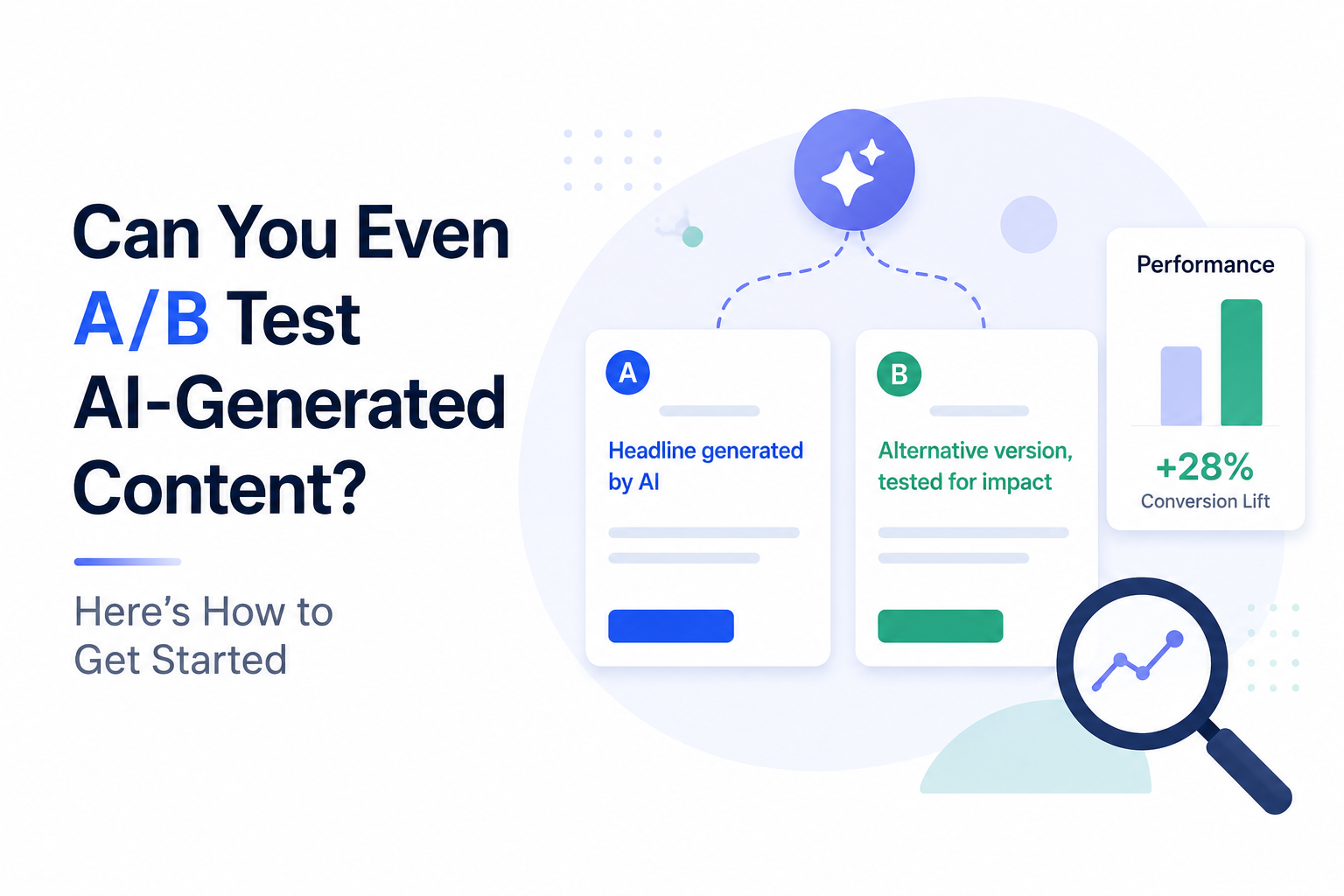
There's a myth floating around that AI-generated copy somehow lives outside the typical rules of testing; that because a model wrote it, you either trust it implicitly or toss it entirely. Neither is really right. AI-generated content is still copy. It still needs to earn its place with data, not vibes based on its provenance. The only real difference is what you're testing and how fast you can do it. Here's how to actually A/B test AI content the right way.
The instinct is to generate two pieces of copy and run them head to head. That's fine, but it skips the more useful test: the prompt itself.
"Write a headline for our new toothbrush" and "Write a headline for our toothbrush that’s easier to hold while offering a deeper clean" will produce very different outputs, and testing those two directions tells you something you can reuse over a longer period of time, not just something that worked once.
Test the instruction, not just the output. You’ll learn a repeatable pattern instead of a one-off winner.
Most teams frame this as human vs. machine. That's the wrong split. The real comparison worth running is actually three vectors:
In practice, the AI-assisted version often wins: Not because AI writes better on its own, but because it removes the “fear of the blank page” and lets a human spend their energy on the refining instead of the initial drafting.
Run all three variants in the same test and let performance decide. But be sure to periodically revisit to test assumptions.
AI makes it trivially cheap to generate 50 headline variants instead of 5, and so there’s a temptation to test all 50 at once. Try not to do this 😁
Statistical significance doesn't care how the copy was written, since it still needs enough traffic per variant to mean anything.
The better move is to use AI's speed for a first-round filter — either with performance prediction scoring or quick internal review — then only put your top 5-10 into an actual live test.
Use AI to widen the funnel of ideas, then narrow before you test, so your sample sizes stay meaningful.
AI output isn't perfectly stable. The same prompt can “drift” depending on model updates or subtle context changes. If you're comparing an AI variant from three months ago to one generated today, you're not always running a fair test.
Regenerate your control alongside your challenger instead of reusing an old AI draft, so you're testing ideas against each other and not testing today's model against last quarter's.
AI tends to regress toward the safe, competent middle, because it's trained to be broadly acceptable, not distinctive. Left unchecked, you'll end up testing five headlines that all sound like polite cousins of each other.
For example: "Manage your projects with ease" vs. "Finally, a project tool your team won't quietly hate."
Deliberately prompt for a boring, on-brand version and a riskier, sharper version, and see if the bold swing actually outperforms.
The bottom line: AI doesn't change the discipline of testing, it changes the economics of it. You can generate more variants, test more angles, and iterate faster than a purely human process ever allowed. But someone still has to define the hypothesis, watch the sample size, and read the results honestly. The teams that win aren't the ones who trust AI copy the most or the least; they're the ones who test it the same way they'd test anything else.
Want to level up your AI testing and performance prediction?
Anyword makes it easy to generate, score, and iterate on content variants — all in one place. Book a demo today!

Transform the way you do business with our AI writing tool. Sign up for free and explore our powerful tools.
Every marketing team needs a solid testing practice, and one that doesn't drain time or budget. This quick guide covers email A/B testing best practices, plus practical tips to help you get better results, faster.
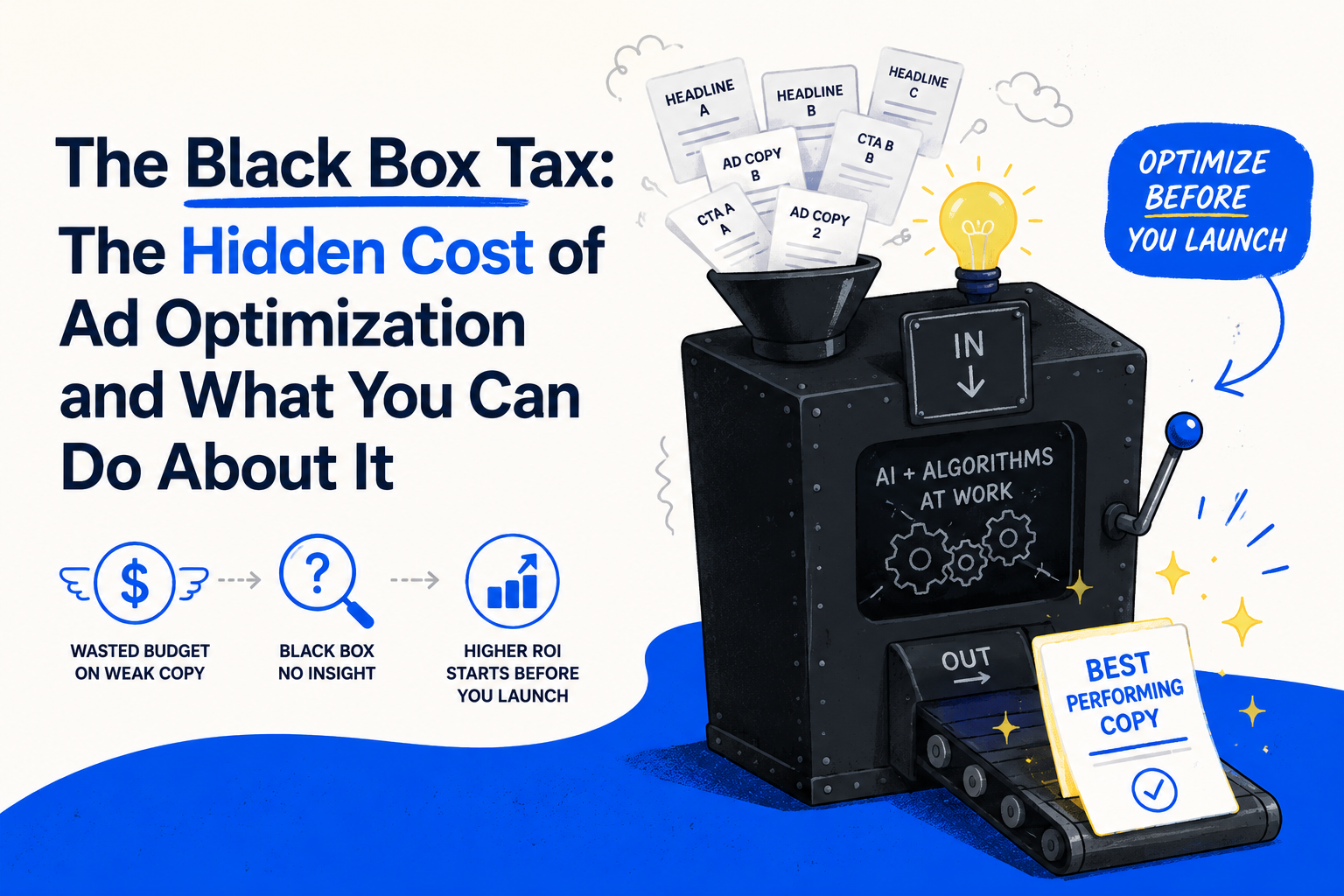
Ad platforms and AI are getting better at optimizing your ads, but they still make you pay to discover what works. Learn how to move beyond the black box by optimizing creative before launch, turning winning insights into a smarter content flywheel, and getting more from every ad dollar.
.svg)