We recommend signing up with your work email to keep all your marketing content in one place


In the old days, marketing was a matter of taste and intuition: knowing what would resonate with your audience and then building a brand and writing copy that would speak to them.
More recently, copywriting became almost synonymous with testing — manually testing everything! Landing page copy, ad permutations, headers, subject lines, CTAs, etc., and then swapping out losers and iterating on winners.
These days, we've given more and more day-to-day control of these copy and language decisions to platforms. Verdicts about content aren't necessarily the subject of team consensus or the result of a human-managed test.
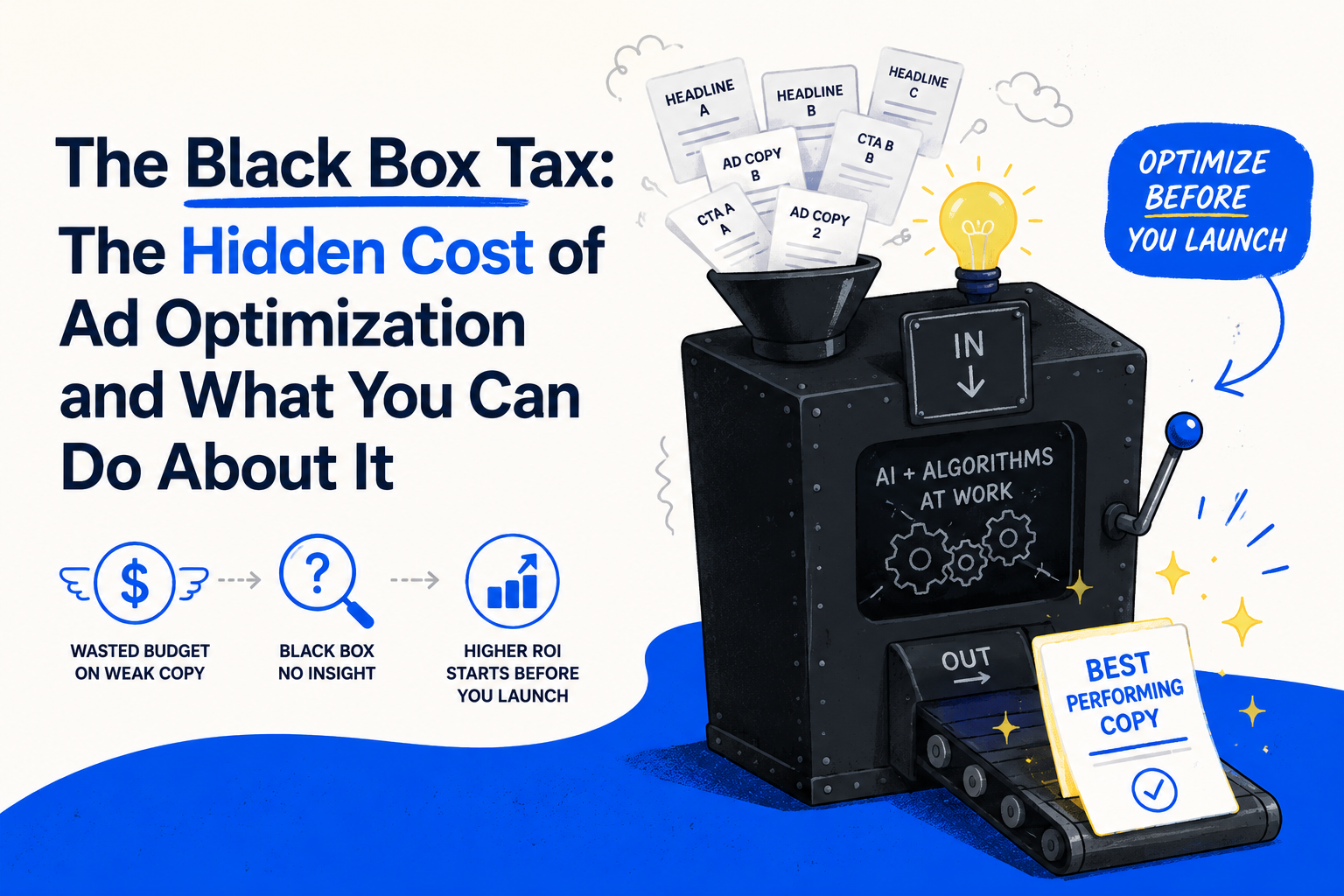
Instead, AI agents running autonomously do a lot of the creative winnowing previously done by humans and specific campaign types like Google Performance Max and Meta Advantage+ automatically determine the highest-performing content, and then serve those variations with greater frequency. But you still don’t have great insight into what worked, or why — it’s a black box! This means that no learnings can really get passed back to the team, let alone spark any kind of future iterations.
But this latest stage brings with it an intrinsic inefficiency:
Your ad platform needs to spend, and needs to run through less performant copy before it can ascertain and amplify the better stuff.
It basically needs to harvest the chaff before it gets to the wheat.
And, critically, this learning process costs money. Ad dollars are being spent to try and then discard lower-performing copy, which ultimately means lower ROI on campaigns and budget that gets wasted. Sure, it's wasted in service of optimization, but there's a better way forward.
Here’s the secret sauce: Optimize before you launch, not afterward.
Yes, it's a little bit more upfront work, but it means that you're giving ad platforms the best possible copy to work with and reducing wasted budget by starting with refined, better-crafted content that you know will work.
It all comes down to a few key precepts:
As time goes on, you’ll spark a virtuous cycle: score and optimize your copy > put it into market > grab the winners and score + optimize those. In essence, you’re increasing the velocity of your content flywheel, and you’ll concretely see the results when it comes time to evaluate your ROI.
Together, we can move beyond the black box!

Transform the way you do business with our AI writing tool. Sign up for free and explore our powerful tools.
Every marketing team needs a solid testing practice, and one that doesn't drain time or budget. This quick guide covers email A/B testing best practices, plus practical tips to help you get better results, faster.
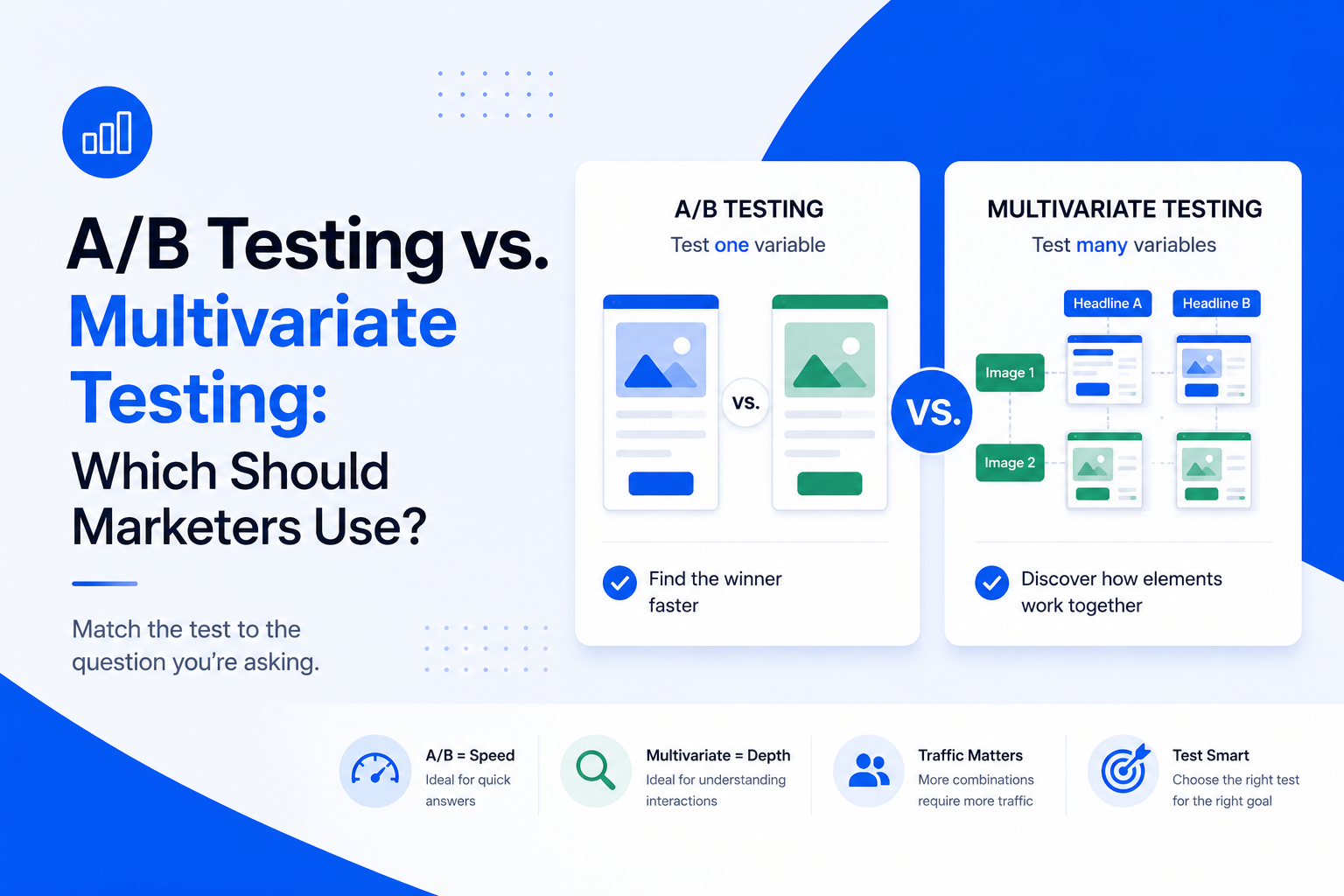
Every marketing team asks the same question: do you test your ideas one at a time, or tackle ‘em all at once? Do you try a million different headlines for “buy our newest toothbrush!” or try two at a time and move forward iteratively?
.svg)