We recommend signing up with your work email to keep all your marketing content in one place

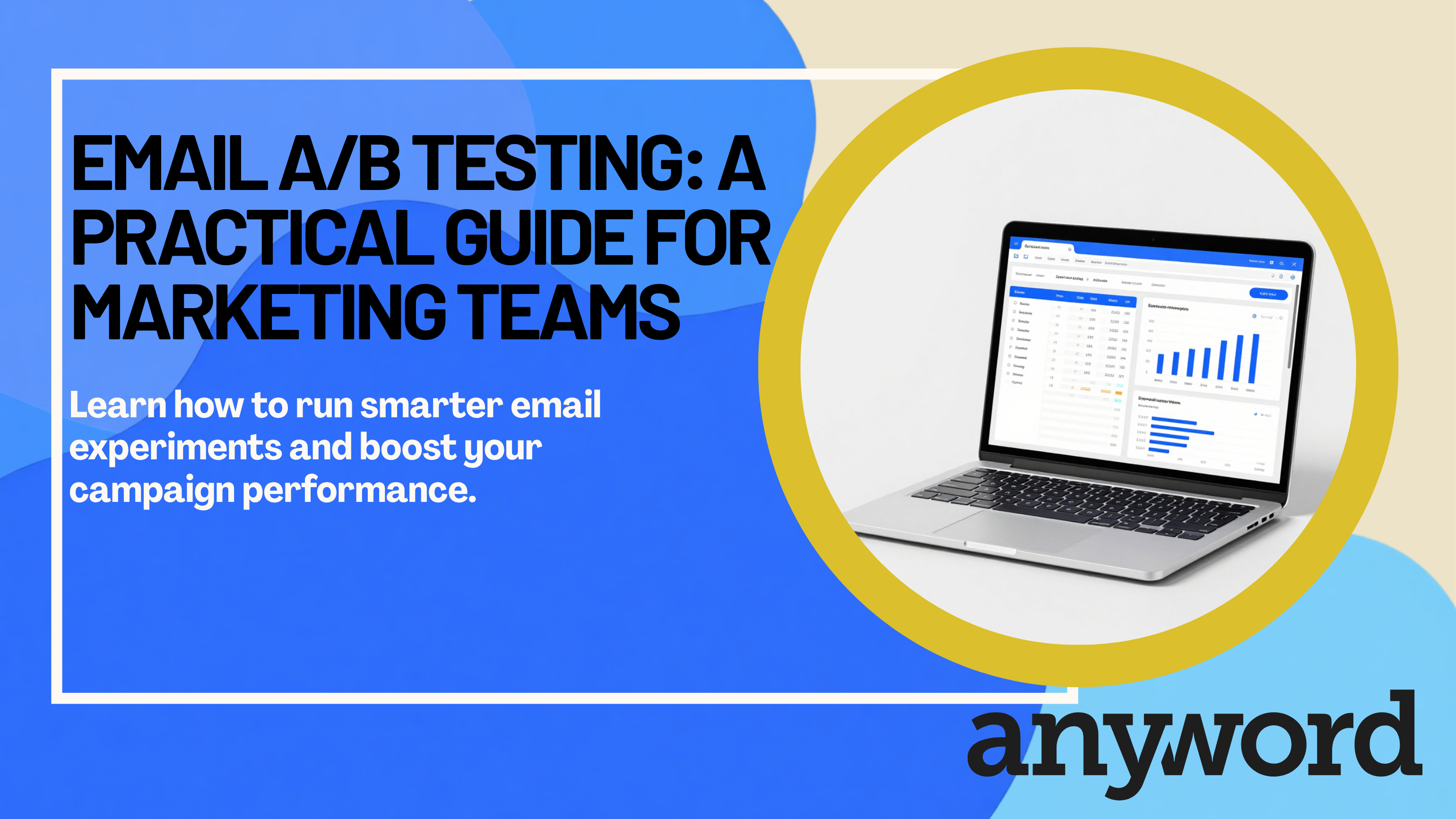

Every marketing team needs a solid testing practice, and one that doesn't drain time or budget. This quick guide covers email A/B testing best practices, plus practical tips to help you get better results, faster.
Start with the highest-impact elements:
#1 Subject line and preheader
#2 Offer and CTA
#3 Body copy
From there move onto:
#4 from name
#5 send timing
Prioritize higher-impact elements because they produce clearer results with smaller audiences.
Additionally, tools like Anyword can allow you to score the potential performance of all of this copy in advance, so you can hit the ground running with high-performing variants.
Apple Mail Privacy Protection inflates open rates, so treat them as directional. You should bias toward clicks, and especially, conversions (trial started, demo booked, content downloaded), then revenue or pipeline per recipient. A subject line that wins on opens but loses on conversions isn't a winner.
Conversions also work as a department-level number: it's comparable across flows, and it gives email and paid a shared language to compare results.
Teams often treat copy as a matter of taste, and test only layout and timing. But copy is a variable like any other.
We’ve analyzed 1,000 head-to-head comparisons of ad copy from fashion and shopping content: 500 headline pairs and 500 post-text pairs. Now, granted, ad copy isn't the same as email copy, but there are clear takeaways that you can keep in mind as you write email copy.
In pairs where one version clearly won, the winner's click-through rate was a median of about 60% higher. These are pairs where a real difference showed up, so don't expect that from every rewrite, but it shows how much the words can matter.
Tip: wording to try first. In our headline data, these won most often:
For longer copy, the angle mattered more than the phrasing, so test the angle first.
Email is a fast, cheap place to learn what your audience responds to: a known audience, results in days, no media spend.
Borrow winning angles as starting hypotheses for ad headlines and landing pages, but be sure to validate them, since context will differ.
Retire messages that keep losing. And keep one shared test log across email and paid, so nobody pays to relearn the same lesson.
Variant quality is usually the bottleneck. Your team's existing model (Claude, Gemini, or Copilot) can draft a wide range quickly. Anyword can then score the options against your goal and audience, so you test the two strongest instead of a random pair. See our post on A/B testing AI-generated content. (will add link here!)
Pick one lifecycle flow, write one hypothesis, generate variants, test the top two, and log the result. Want stronger variants going into every test? [Book a demo] to see how Anyword scores your email copy before you send.

Transform the way you do business with our AI writing tool. Sign up for free and explore our powerful tools.
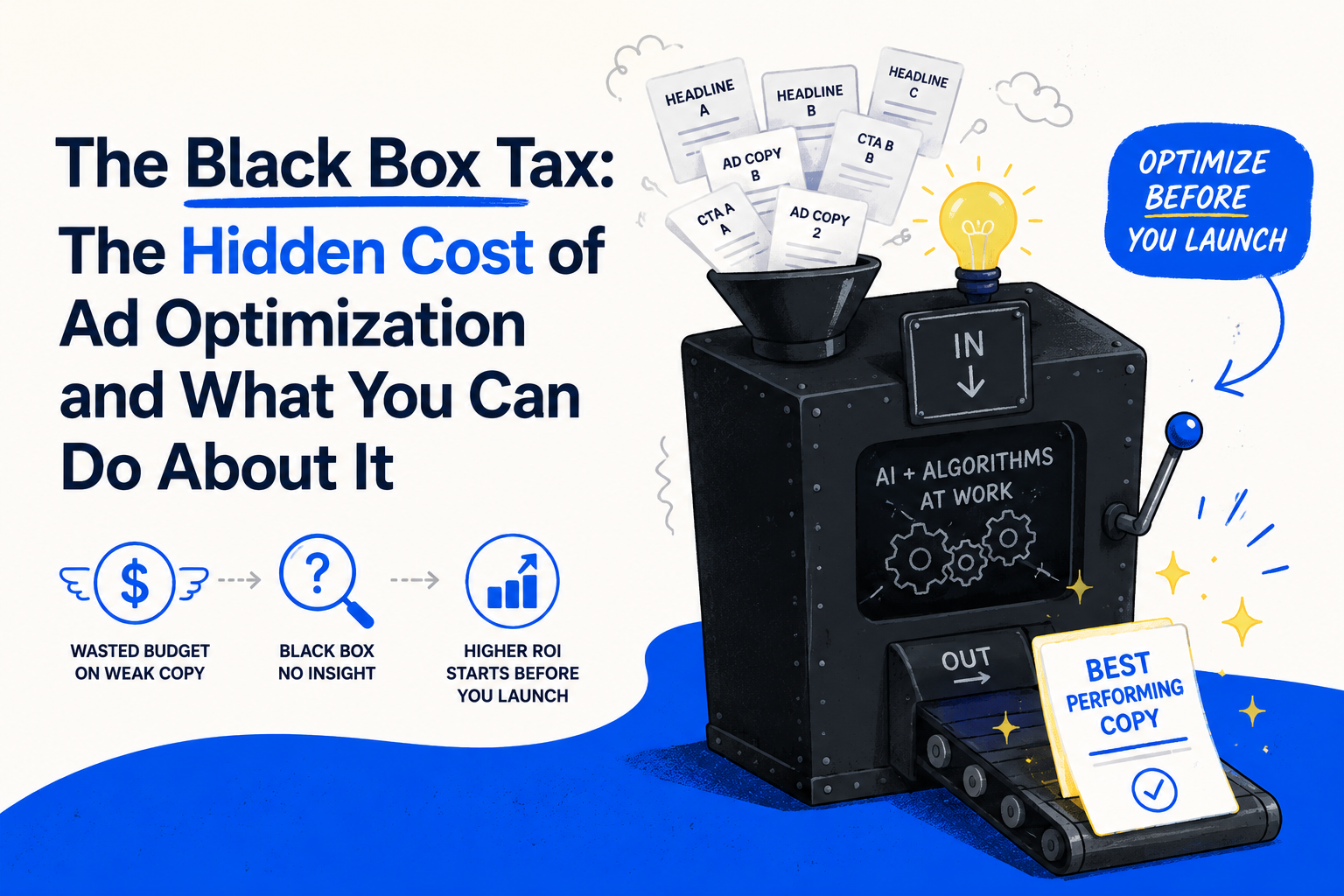
Ad platforms and AI are getting better at optimizing your ads, but they still make you pay to discover what works. Learn how to move beyond the black box by optimizing creative before launch, turning winning insights into a smarter content flywheel, and getting more from every ad dollar.
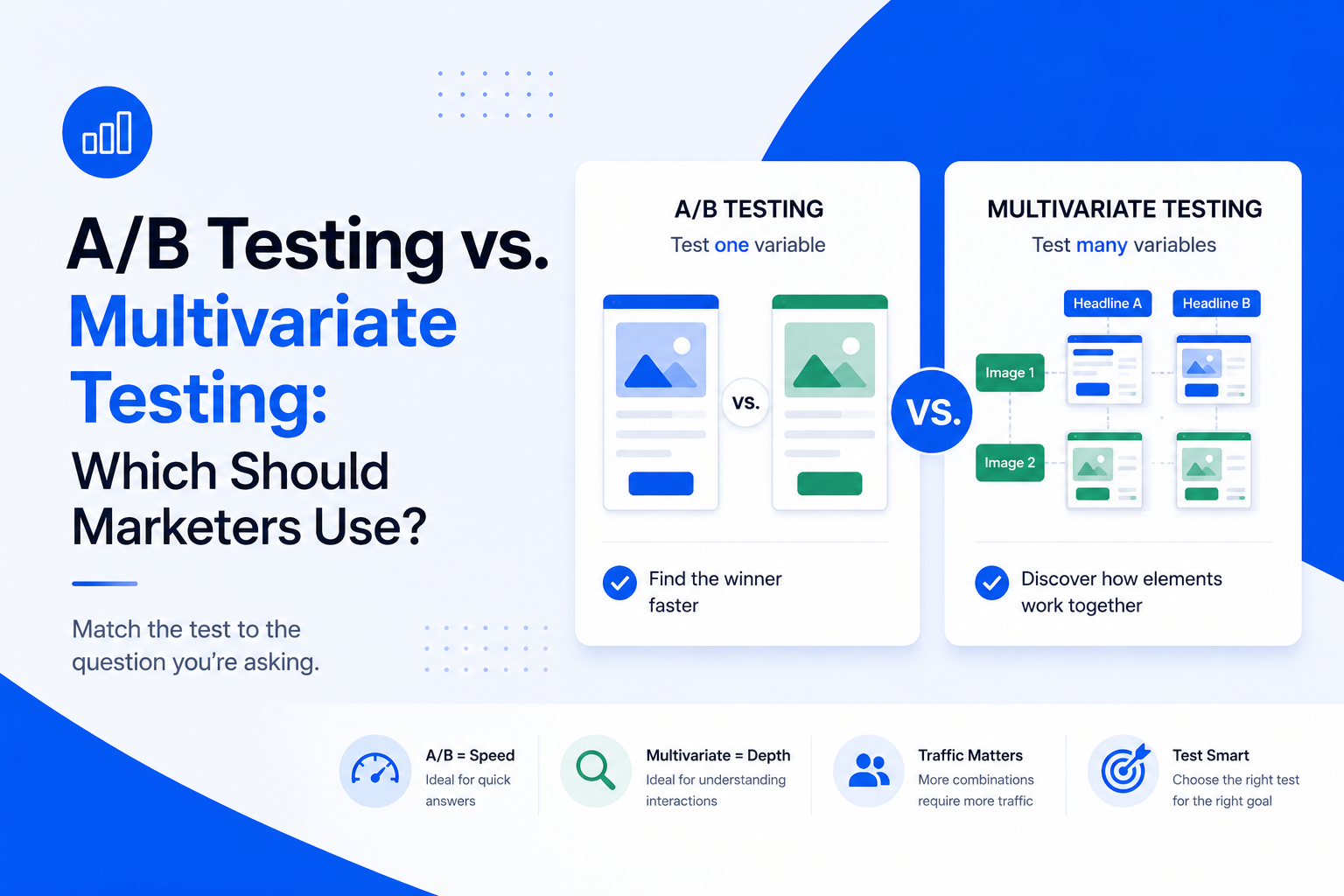
Every marketing team asks the same question: do you test your ideas one at a time, or tackle ‘em all at once? Do you try a million different headlines for “buy our newest toothbrush!” or try two at a time and move forward iteratively?
.svg)