We recommend signing up with your work email to keep all your marketing content in one place

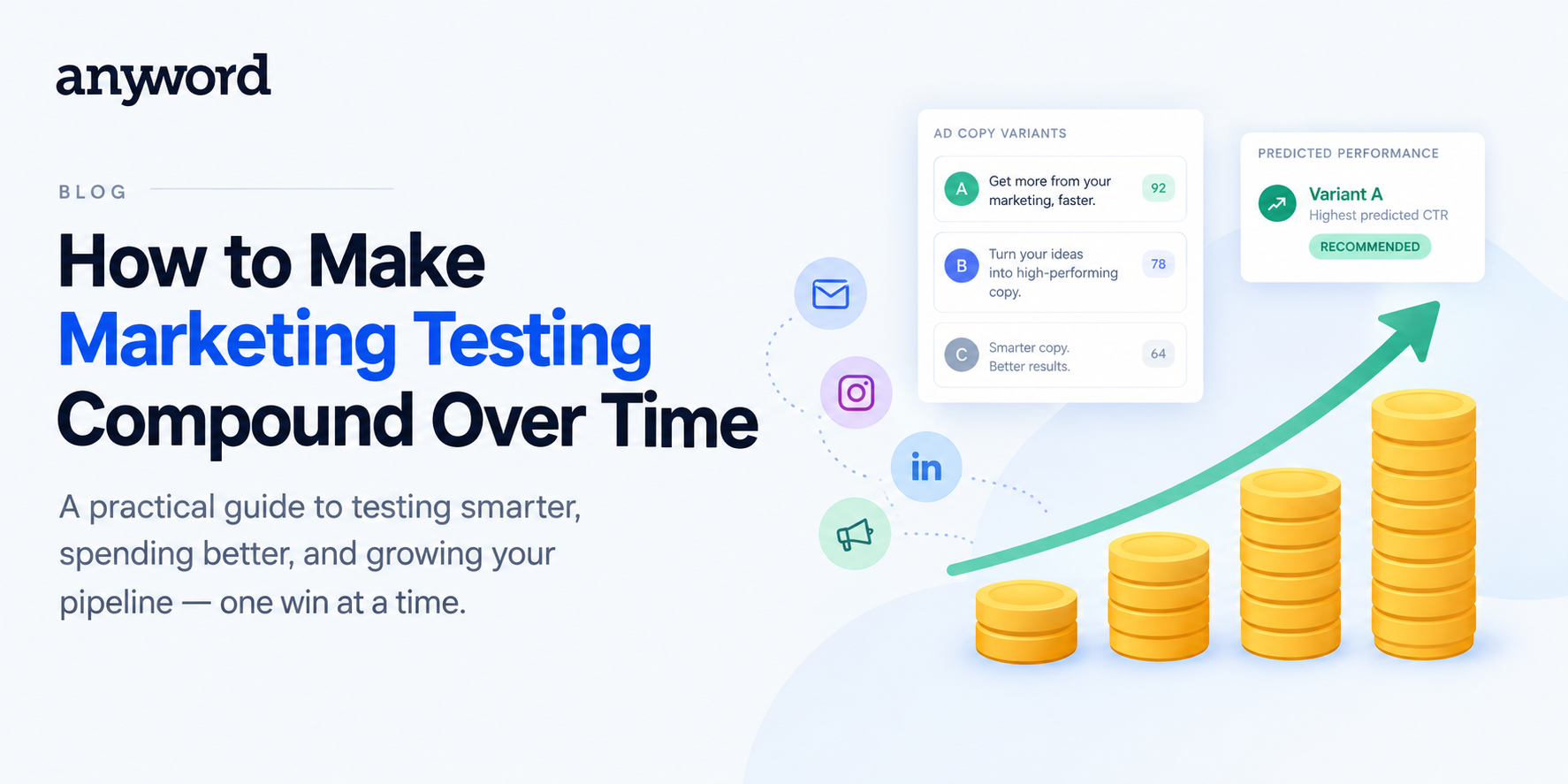

There's a common adage that compound interest is the eighth wonder of the world. $1 turns into $2, $2 turns into $4, $4 turns into $8, and before long, time is doing the work for you. The same dynamic applies to marketing testing, whether it's paid ads, organic social, email, or landing page copy.
If your team has both a process and a system in place to test copy, and to test it before launch, you save time and budget up front and see compounding benefits over time. Those benefits show up as lower CPAs and CPLs, stronger ROI, and, of course, better pipeline numbers.
Here's everything you need to know about getting started with marketing testing, how to build a process that keeps compounding, and how to share what you learn across your team.
The Value of Marketing Testing (before you launch!)
Most teams launch first and ask questions after.
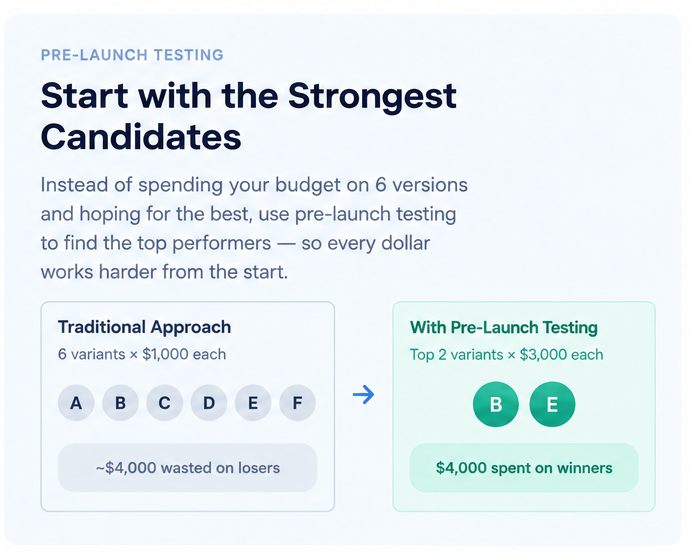
They write 2-3 versions of an ad or email, put equal budget behind each version, and then wait for the clicks or leads to roll in… or not. The problem here is that the budget spent on the losing versions of content is a price you pay to learn something you could often have predicted beforehand. And those costs add up — both in terms of wasted upfront spend, as well as missed ROI!
Pre-launch testing flips that. Before any spend goes out, you score your variants against historical performance data, cut the ones that are likely to lose, and put real dollars behind the strongest contenders.
Say you have $6,000 to test an ad campaign. Spread across six ad variants, roughly $4,000 goes to headlines that were never going to win. But if your team uses a pre-launch testing tool to whittle your options down to the top two, then that means that your budget goes to headlines with a real shot. And remember — a dollar saved is a dollar reinvested.
Additionally, the losing tests pay too. A loser tells you which angle your audience ignores, which saves you from spending on it to begin with.
That's the first layer of compounding: every dollar of test budget is spent on a better candidate right out of the gate, and so each test is more likely to produce a winner.
This is also where a tool like Anyword can help your supercharge your results. A marketer can utilize whichever AI your team already likes — Claude, ChatGPT, Copilot — to generate a wide range of angles, then let a tool like Anyword use its millions of performance datapoints to help decide which versions should be the ones to hit folks’ inbox or appear on their feed.
How to Get Started
Your team don't need a dedicated data scientist or a quarter of your ad budget runway. You need one channel, one metric, and an internal tool that can point you in the right direcito.
Iterate…and then iterate again
A single test might lift click-through rate by a few percentage points. This is great on its own, but the real magic comes from compounding.
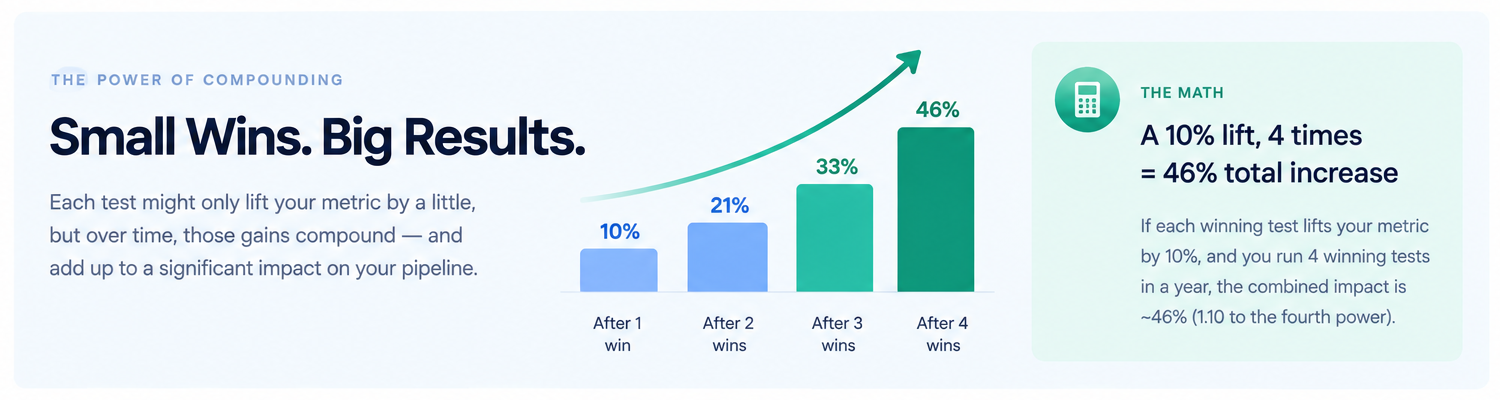
Once the channel owner has found a winner, it becomes the control group. The next test starts from a higher baseline, and they test a new variable against it. A realistic win rate is about one in three, so say your team might run 12 tests in a year, land 4 winners, and each lifts its metric by 10%. That compounds to roughly 46% (1.10 to the fourth power) on the same traffic and the same budget.
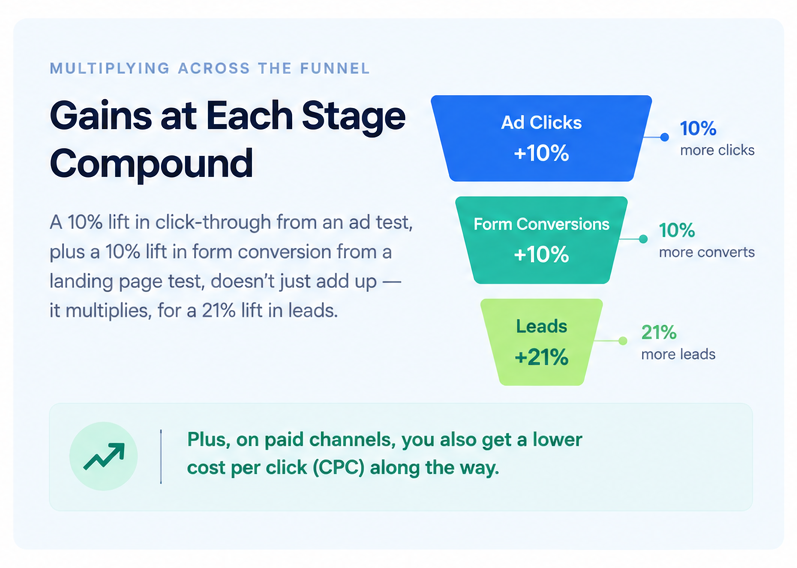
Then add the funnel. Gains at different stages multiply instead of adding. A 10% lift in click-through from an ad test, plus a 10% lift in form conversion from a landing page test, is about a 21% lift in leads, and on paid channels it comes with a lower cost per click on top.
Testing at several stages of the funnel is how a handful of modest wins becomes a visibly different pipeline number.
Share your results
Compounding only works if your team sticks with it, over time. Teams that test constantly but don’t continuously apply learnings or share information will end up stunting their growth and leaving budget on the table.
To truly maximize ROI, get the individuals who manage each channel — demand gen, organic social, lifecycle email, content/SEO, etc — in one room, and have them share learnings from the tests they’ve run, and roll out those learnings across channels.
• Ensure that each channel owner keeps a simple test log. Hypothesis, variants, metric, result, and what you'll do next. Five minutes per test is the cheapest compounding investment you'll make.
• Get everyone aligned, and reproduce winning copy or concepts across channels. A subject line that wins in email is a hypothesis for your LinkedIn post, your ad headline, and your landing page hero. One test, several returns.
• Report in pipeline terms. Stakeholders don't care that variant B beat variant A. They care that CPL dropped and demo volume went up. Lead with the business result, and put the test detail underneath.
• Make it a rhythm. A short monthly recap of what you tested, what won, and what's next keeps testing a visible part of how the team works rather than a side project.
The best marketing team are the ones who have thoughtful testing process, who use their budget with fidelity, and who have an internal culture of continuous learning that enables them to compound their ROI over time — because that’s where the real magic is. ✨
Ready to start compounding your copy performance? Book a demo to see how Anyword helps marketing teams generate, predict, and test high-performing copy before launch, across ads, social, email, and long-form content, on top of the AI models you already use.

Transform the way you do business with our AI writing tool. Sign up for free and explore our powerful tools.
Every marketing team needs a solid testing practice, and one that doesn't drain time or budget. This quick guide covers email A/B testing best practices, plus practical tips to help you get better results, faster.
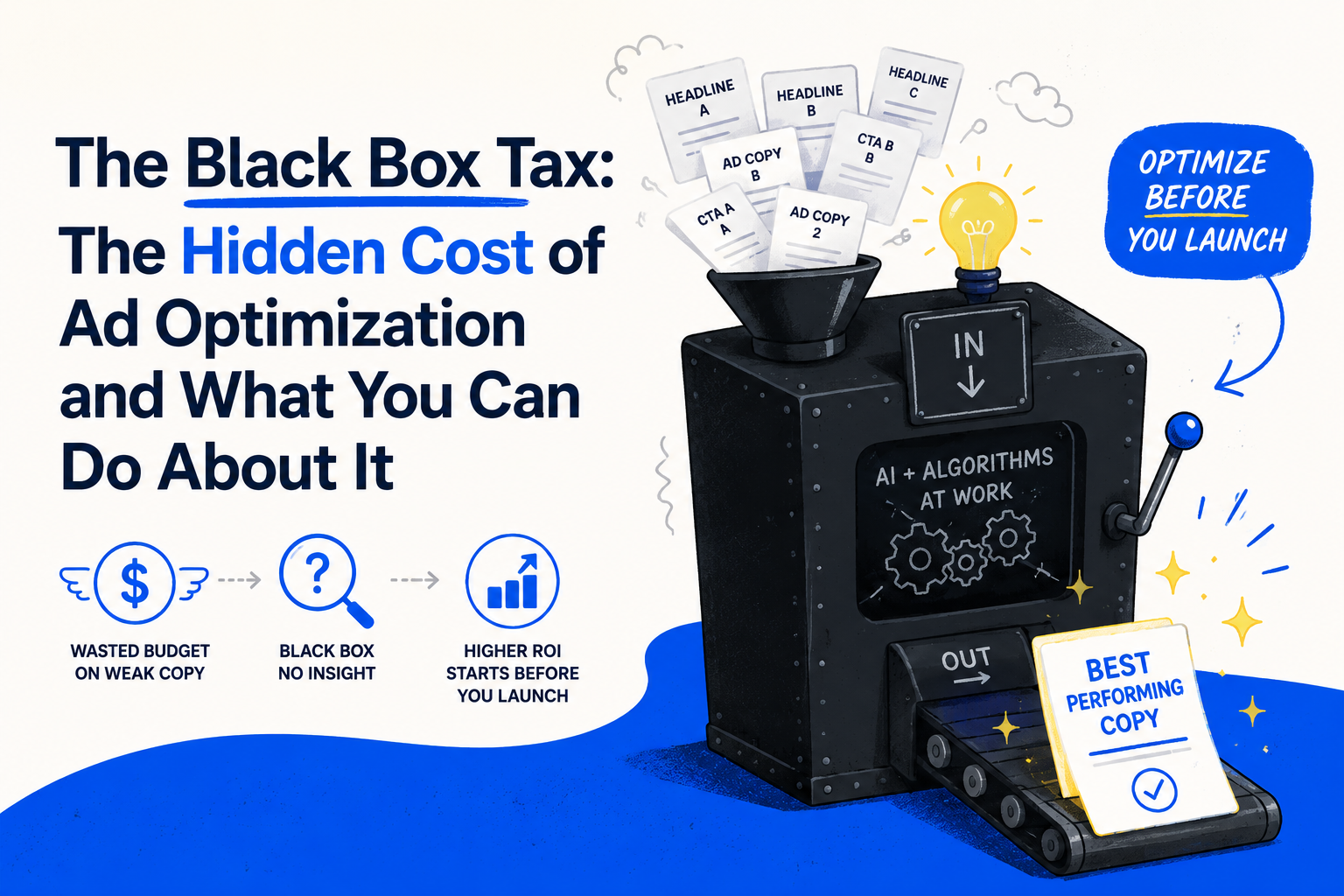
Ad platforms and AI are getting better at optimizing your ads, but they still make you pay to discover what works. Learn how to move beyond the black box by optimizing creative before launch, turning winning insights into a smarter content flywheel, and getting more from every ad dollar.