
We recommend signing up with your work email to keep all your marketing content in one place


An AI content strategy that protects brand voice starts with defining that voice explicitly — in writing, with examples — before any content actually goes live. From there, the strategy needs three things:
Brand voice erodes not because teams use AI, but because they skip the definition step and let the tool improvise.
Most brand voice problems that get blamed on AI existed before the AI showed up. If a brand's tone was already inconsistent across writers, channels, and campaigns, adding an AI tool into the mix doesn't create that inconsistency; it just makes it faster and more visible.
The teams that end up with generic, forgettable AI content usually skipped a step: they never wrote down what their brand actually sounds like. They asked a tool to "sound like us" without ever defining what "us" means in specific, usable terms. The tool did what any writer would do without a brief: it defaulted to the safest, most average version of the request.
So before talking about workflows or tools, the real starting point is definition.
A brand voice isn't a vibe. It's a set of specific, testable choices:
The most useful version of this isn't a paragraph of adjectives ("bold, friendly, trustworthy") — it's paired examples. As an exercise internally, show a sentence written in your brand voice next to the same sentence written generically, and annotate what changed and why. This is what actually gives an AI tool — or a new hire — something concrete to work from.
A style guide that lives in a Google Doc nobody opens doesn't protect anything. The brands that maintain consistency at scale build their voice guidelines directly into how content actually gets produced — as prompt context, as a reference the tool checks against, or as a formal brand governance layer in whatever platform generates the first draft.
The goal is to make following the brand voice the path of least resistance, not an extra step someone has to remember.
Not all content carries the same brand-voice risk. A useful way to sort content types:
Content TypeAI's RoleWhyAd copy variants for testingGenerate many, human selectsHigh volume, low individual stakes, judgment applied at selectionProduct descriptions at scaleGenerate from structured dataRepetitive, rules-based, easy to templateEmail subject linesGenerate and scoreTestable, low cost if one variant underperformsBlog posts and long-form contentDraft assist, human writes/editsBrand POV and nuance matter more than speedExecutive or thought leadership contentHuman-led, AI for research/structure onlyVoice is the value; automating it removes the pointCrisis or sensitive communicationsHuman-led onlyJudgment and timing outweigh speed
The pattern: as content gets more strategic, more public-facing at the executive level, or more sensitive, the human's role shifts from reviewing to driving.
Even for content types where AI drafts well, nothing should publish without a human checkpoint for anything a customer or prospect will see. This isn't about distrust of the tool; it's about the same principle that applied before AI existed: a second set of eyes catches what the first pass misses, whether that first pass was written by a person or a model.
The review layer is also where brand voice actually gets protected in practice. A style guide sets the intent; the review step is where someone confirms the intent was met.
Brand voice guidelines that get written once and never revisited tend to drift out of date as the brand evolves, new content types get added, or new team members bring their own instincts. The strongest AI content strategies revisit the voice definition periodically: updating examples, tightening ambiguous rules, and correcting for any drift that's crept into recent output.
The point of an AI content strategy was never to make content generic faster. It was to remove the bottlenecks — the blank page, the repetitive formatting, the slow first-draft cycle — so the team's time goes toward the decisions that actually require a human: what to say, how to say it distinctly, and when a piece of content needs more care than a template can offer.
Done well, AI doesn't dilute brand voice. It's the absence of a defined voice, not the presence of AI, that can erode a brand’s tone.
Does using AI for content hurt brand consistency?
Not inherently. Brand voice erosion usually happens when a team never explicitly defined its voice in the first place, not because an AI tool was introduced. AI tends to reflect whatever direction — or lack of direction — it's given.
What's the first step in building an AI content strategy?
Define the brand voice in specific, written terms before introducing any tool into the workflow, including concrete examples of what the voice sounds like versus what it doesn't.
What content should never be fully automated for brand voice reasons?
Executive thought leadership, crisis communications, and anything where the brand's specific point of view is the primary value should stay human-led, with AI used only for research or structural support.
How often should a brand voice guide be updated?
Periodically. Most teams benefit from revisiting it at least a couple of times a year, or whenever new content types, channels, or team members are introduced, to catch drift before it compounds.
Anyword's brand voice tools let teams train AI on their specific tone and style, so content generation stays on-brand across every channel, without a human rewriting every draft from scratch.

Transform the way you do business with our AI writing tool. Sign up for free and explore our powerful tools.

Ad platforms and AI are getting better at optimizing your ads, but they still make you pay to discover what works. Learn how to move beyond the black box by optimizing creative before launch, turning winning insights into a smarter content flywheel, and getting more from every ad dollar.
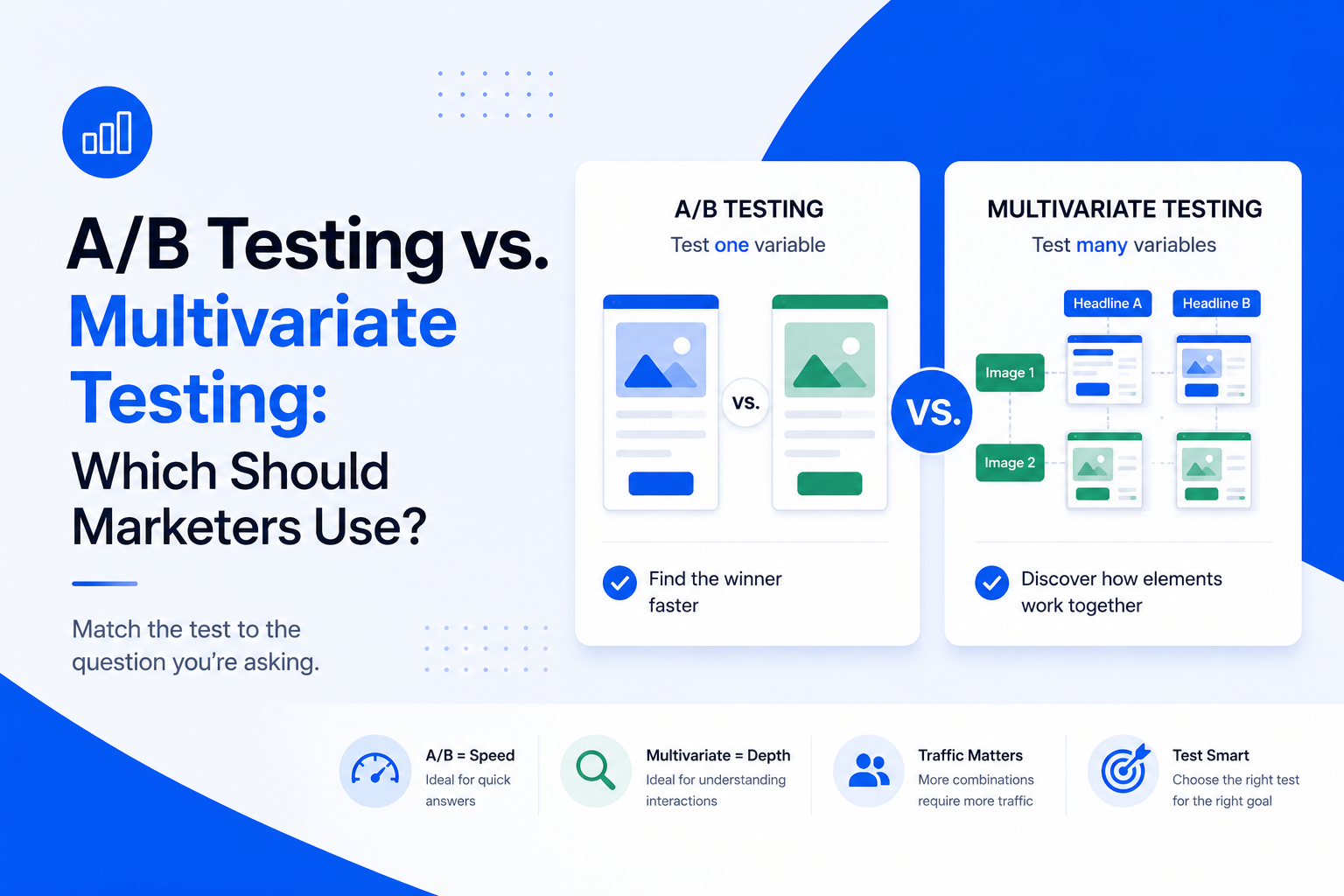
Every marketing team asks the same question: do you test your ideas one at a time, or tackle ‘em all at once? Do you try a million different headlines for “buy our newest toothbrush!” or try two at a time and move forward iteratively?
.svg)


