
We recommend signing up with your work email to keep all your marketing content in one place


Content testing means evaluating how copy, headlines, or CTAs will perform before they go live — through audience panels, low-stakes A/B tests, or AI-based performance prediction — instead of waiting to learn from a live campaign's results. The teams that build this into their workflow spend less budget on guesses and iterate faster.
You've written three versions of the headline. You've debated the CTA with your team. You've rewritten the intro twice. And then you just... pick one. Usually based on gut feeling, whoever has the loudest opinion in the room, or whichever version you wrote last.
Sound familiar? It's how a lot of marketing content gets made. And it's why so much of it underperforms.
The good news: there's a better way to work. Here's a practical introduction to content testing, what it is, why it matters, and how to build it into your workflow before you hit publish.
Content testing is the practice of evaluating how your copy, headlines, CTAs, or messaging will perform with your audience before (or right as) it goes live. It ranges from structured A/B tests on live campaigns to pre-publish scoring tools that predict performance based on historical data.
The goal is simple: make fewer expensive guesses.
The most common approach to content testing is the retroactive kind. You publish, you watch the numbers, you iterate next time. This works eventually, but it's slow and costly. You're spending real budget on underperforming variations. You're waiting weeks for statistical significance. And by the time you have learnings, the campaign is nearly over.
Testing before you publish flips the model. Instead of learning from failure, you're predicting success.
1. Audience feedback and review panels
Show draft content to a small sample of your target audience before publishing. This works well for brand campaigns, landing pages, or any content where tone and resonance matter as much as the message. The downside: it takes time and doesn't scale easily, especially to paid channels.
2. A/B testing on low-stakes placements first
Before running a headline across a major campaign, test it in a lower-stakes environment, like an email subject line or a social post. You get real audience signal without burning your main budget.
3. Performance prediction tools
A newer category of AI tool can score your copy before it goes live, based on patterns from high-performing content across industries and channels. These tools give you a signal on which variation is likely to outperform, so you can make a more informed choice before you commit.
Not everything needs to be tested with the same rigor. Focus your testing energy on the elements that have the biggest impact on performance:
The biggest obstacle to content testing isn't the tools or the process. It's the habit. Teams that test consistently build it into their content briefs from the start: every brief defines what's being tested, the relevant KPIs, and how the results will inform the next piece.
Start small. Pick one campaign this quarter and commit to testing at least two copy variants before you finalize. Track what you learn in a spreadsheet. Over time, those learnings compound into a real content intelligence advantage.
If you want to accelerate that process, tools like Anyword can predict how your copy will perform before it ever reaches an audience, taking much of the guesswork out of the choices you'd otherwise be making by, well, vibes.
The goal isn't to remove judgment from content creation. It's to make sure the judgment you're exercising is actually informed… and will perform!
What is content testing?
Content testing is the practice of evaluating how copy, headlines, CTAs, or messaging will perform with an audience before it goes live, using methods like audience panels, low-stakes A/B tests, or AI-based performance prediction.
What's the difference between A/B testing and performance prediction?
A/B testing measures how variations perform with a live audience, usually after some content has already been posted, published, or sent. Performance prediction uses AI models trained on historical data to estimate how a piece of copy will likely perform before it's ever shown to anyone.
What should you test first in your content?
Start with ad headlines and email subject lines, since they have the highest leverage and widest range of performance outcomes, followed by CTAs, value propositions, and tone.
How do you build content testing into a workflow?
Add testing requirements directly into content briefs — define what's being tested, what success looks like, and how results will shape future content — and start with one campaign per quarter before scaling the habit across your team.

Transform the way you do business with our AI writing tool. Sign up for free and explore our powerful tools.
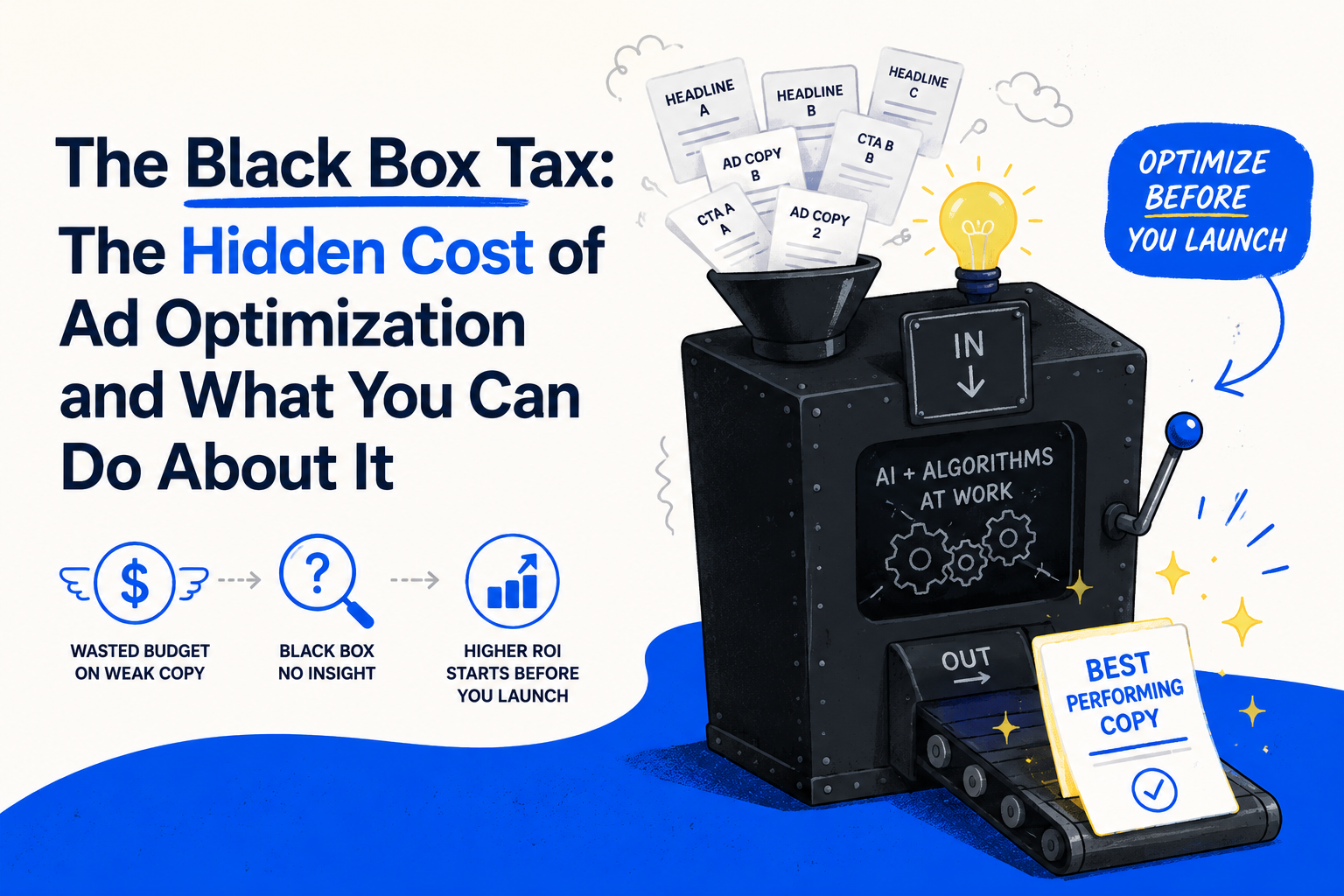
Ad platforms and AI are getting better at optimizing your ads, but they still make you pay to discover what works. Learn how to move beyond the black box by optimizing creative before launch, turning winning insights into a smarter content flywheel, and getting more from every ad dollar.
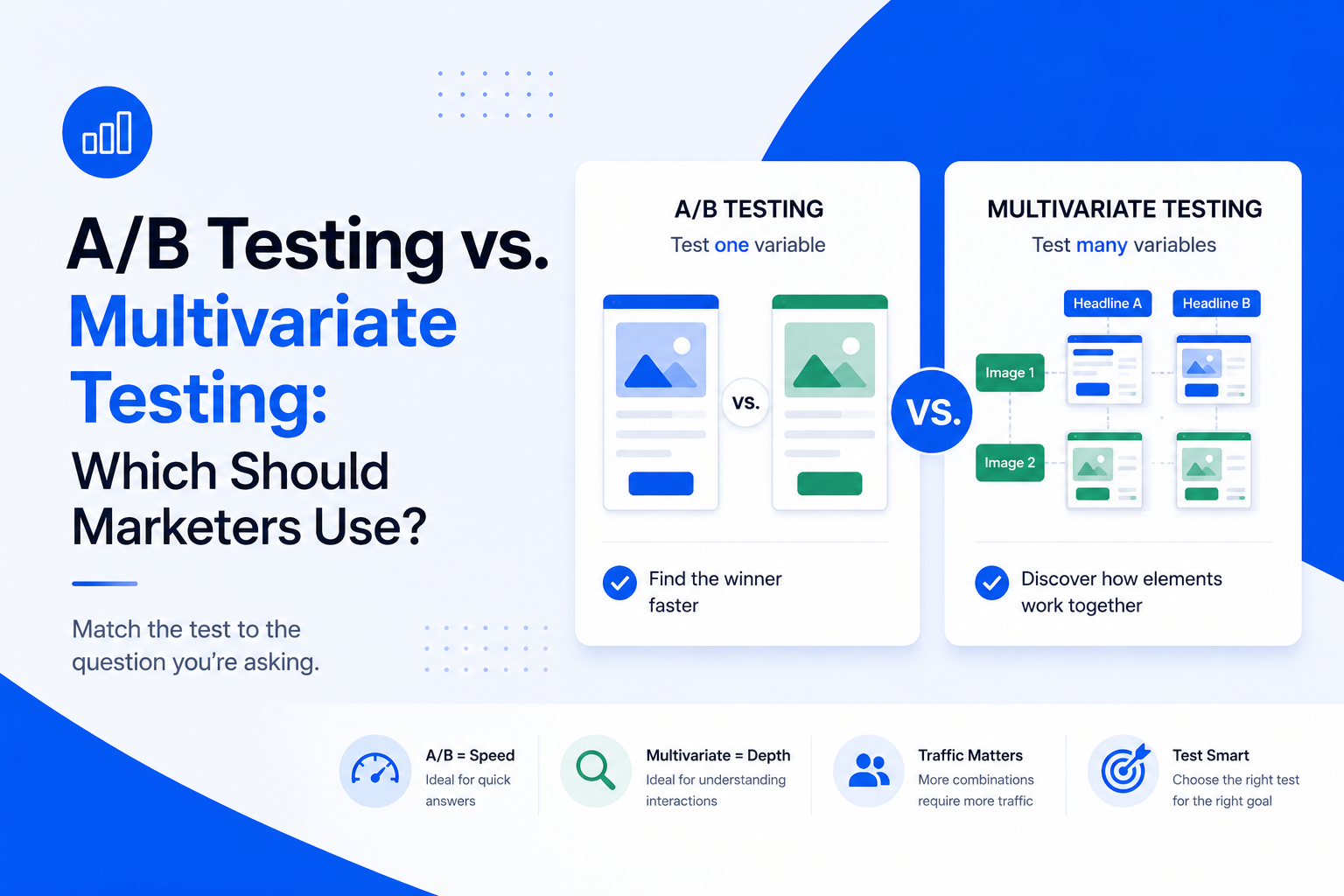
Every marketing team asks the same question: do you test your ideas one at a time, or tackle ‘em all at once? Do you try a million different headlines for “buy our newest toothbrush!” or try two at a time and move forward iteratively?
.svg)


